Tuesday, February 28, 2012

The mechanics of regular blogging

Chris Blattman sums it up:
My only worry: The trouble with posting substantive stuff daily is that the regimen is hard to maintain. Most academic bloggers burn out after a couple of years of this.
I am on year four. My secret to longevity? Six days out of seven I cut and paste peculiar drivel I that catches my interest on the web. Sometimes I even read part of the papers I reference. Once in a while I re-read a draft before hitting “Publish”. And on the seventh day, I rant. The secret is out!
I resolve more or less daily to increase the ratio on this blog of economics (or at least econometrics) to amusement of various sorts but Chris is correct about the time constraint. It binds with a vengeance.

Save the NLSY

I received two emails like this yesterday from different people. The NLS is a very worthy cause. It is one of the best of the major social science panel data projects. Moreover, unlikely the vast majority of things that the US federal government produces, it is actually a public good.

------------------------------------------------------------------

Dear Colleague, I am writing to alert you that the National Longitudinal Surveys (NLS) program faces the biggest threat in its 47-year history, due to a recent disturbing decision by the Bureau of Labor Statistics (BLS).

Despite receiving almost level funding in the current federal Fiscal Year (FY12) budget, the BLS has decided that for the remainder of FY12, it is cutting NLS funding from $5.6 million to less than $1 million – essentially eliminating the program for this year. The FY12 budget for the BLS, finalized recently, represented a reduction of 0.18% while the impact on the NLS for the unspent remainder of FY12 is a reduction of 83.9%. This disproportionate reduction represents a devastating erosion to the viability of the NLS and has resulted in an immediate cessation of field activities. Of even greater concern is that this funding reduction is being accompanied with a plan to move the NLS to a triennial data collection. Pushing these surveys out from annually to every three years will reduce the reliability of the data and could potentially be the beginning of the end of this essential national data resource. We can only achieve a reversal of this decision with your help!

At this time of economic uncertainty, we need access to the detailed longitudinal data collected by the NLS. Both the NLSY79 and the NLSY97 garner response rates of 80% or higher, and provide invaluable employment, economic, health, housing, education, joblessness, and other information to approximately 5,000 researchers in the public, private, academic, and non-profit sectors. By conservative estimates, there are more than 7,000 studies that utilize NLS data, and NLS findings have played an integral role in informing policymaking at all levels of government.

We cannot afford to lose this precious national resource. Therefore, I ask you to join me in taking action to help to preserve the NLS:

(1) Please contact Department of Labor Secretary Hilda Solis (Hilda.Solis@dol.gov or 202-693-6000) and Acting Deputy Commissioner of BLS, Jack Galvin, (Galvin.John@bls.gov or 202-691-5200) to stress the utility and importance of the NLS and ask them to rescind these cuts.

(2) Please share this information and the attached national stakeholder letter with your network and your own institution and urge them to sign-on. The letter will be sent to Secretary Solis, urging her to restore $4.7 million to the NLS program for this year. We need many institutions and organizations to add their voice to this cause. To sign onto the letter, please contact Rebecca McGrath at 202-230-5679, or Rebecca.mcgrath@dbr.com.

(3) Please contact your Members of Congress and ask them to support the NLS, by sending the attached letter to Secretary Solis. To reach your elected officials in Congress by phone, please call the Capitol Switchboard at (202) 224-3121 and ask to be connected to the office of your Representative in the House and then call back to be connected to your two U.S. Senators (just let the operator know from which state you are calling). Tell each of them to contact Secretary of Labor Solis voicing their opposition to the reduction in funding for the National Longitudinal Surveys and urging her to restore $4.7 million in funding for FY12 to support this important national resource. Please join me in this effort to preserve these valuable data.

Thank you for your help.

Sincerely,

[famous labor economist]

Monday, February 27, 2012

Assorted links

1. A fine British meditation on higher education disguised as a book review in the Financial Times.

2. The science of dinosaur sex. Maybe it is just me, but it sounds like the scientists are mostly making it up as they go along.

3. Ayn Rand on love. Seems to me that on the spectrum from complete self-sacrifice to complete selfishness, neither corner solution is optimal.

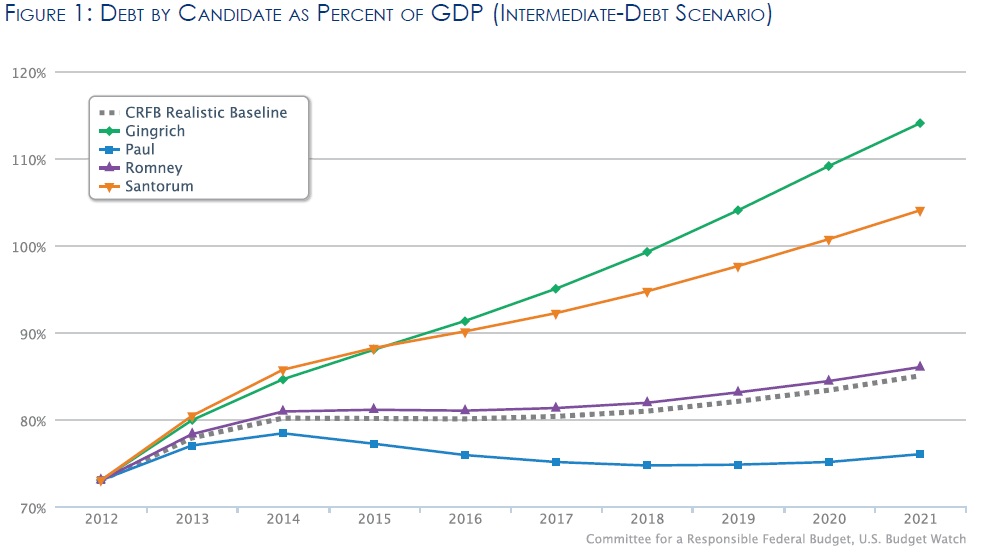
4. If you needed a reminder that generic republicans only care about the deficit when they are not in charge, here is another one.

5. Wise thoughts on the U.S. social safety net from Will Wilkinson. I would actually like to see a clearer distinction between insurance programs where the government's role is to eliminate moral hazard by forcing participation and transfer programs, where the government's role is to insure a minimum standard of living for those who cannot or will not provide one for themselves.

Hat tip on #2 and #4 to Charlie Brown. #3 is via Chris Blattman.

Saturday, February 25, 2012

Apple, the NYT, and the Law of Large Numbers

The NYT worries about Apple's stock price, imagining apparently that the law of large numbers is somehow relevant to making a prediction of its future course.

At times confusing the law of large numbers, which is about the behavior of means of draws from identically distributed random variables, and an imagined law of numbers that are large, such as Apple's market capitalization, at other times confusing stock variables, such as Apple's market capitalization, with flow variables such as the GDP of countries, and, more basically, never indicating the random variable (the price? the change in the price? some other thing?) that the law of large numbers is supposed to apply to, the NYT makes a complete statistical hash of the entire discussion. There is no reason, for example, to think that stock price draws over time for a particular company represent independent, identically distributed random variables, which is what the law of large numbers applies to, yet that is what one must believe for the arguments in the article regarding the stock price to make sense.

What a mess.

Hat tip: Nic Duquette

Interpreting Rick Santorum


Also perhaps relevant, an article from Science in 1970 (!) that reports that a large majority of American Catholic women at that time (and surely the fraction has not declined since then) were using birth control methods disapproved of by the church.

My sense is that this is a manufactured culture war controversy designed to excite the social conservative base. More broadly, my general thought about moral issues is that if you think it is wrong, then don't do it, and make the case to others that they should not do it. If you convince everyone (or almost everyone) not to do it, then a law is unnecessary. If you don't, then a law is inappropriate.

In regard to this particular context, and putting aside moral / religious issues, I think it is a bad idea for government to mandate the contents of private health insurance policies. My sense is that these mandates are usually the result of coalitions of activists preoccupied with particular products or health conditions and providers seeking to promote their financial interests. My preference would be for the government to define a set of generic policies of varying levels of generosity, to provide focal points ideally based on the science and the economics, and then for private plans to be able to choose one of these and then be very clear about where and how they deviate. This view is a parallel to my view about the marriage contract, where I think that the government should define one or two default contracts, that private parties can then accept or else contract relative to. In complex contractual situations like marriage and health insurance, there is a public good aspect to having some reasonable default contracts around to serve as baselines / focal points.

Hat tip on the comic: Charlie Brown

Imbibing in Utah

Utah considers requiring that at least two members of the commission in charge of regulating alcohol sales in the state have (imagine!) actually consumed some alcohol, and not just in their wild youth.

Key bit:
Utah’s liquor regulations are among the strictest in the nation, with state-owned retail stores and tight rules in bars. And as the Control Commission’s Web site makes clear, that is not about to change soon, no matter who sits, or sips, on the board.
“The purpose of control is to make liquor available to those adults who choose to drink responsibly — but not to promote the sale,” the site says. Mr. Doughty said in an interview that the language in his bill about drinking for at least a year was meant to guarantee that the commission gets a real, current perspective on how alcohol is sold and used in the state, and weed out applicants who might have had a wild, one-time fling long ago.
“I didn’t want someone to be able to say, ‘I had glass of wine or a beer 10 years ago, and that makes me a consumer of alcohol,’ ” he said.
For foreign readers, it helps to know that a large majority of Utah residents are latter-day saints, and so do not drink.

I think this idea of having regulators be familiar with the things they regulate is an excellent one, and suggest requiring some actual pot-users in high level positions at the Drug Enforcement Agency. It certainly couldn't make that agency any worse and, at least, they might chill out a bit.

Hat tip: Ken Troske

NYC releases individual teacher value-added measures

The New York City schools have released value-added estimates for individual teaches over five years.

This should make for some lively discussion over the next few days.

For the technically inclined, the NYT reporters' mangling of basic statistics about 2/3 of the way through the article will provide some entertainment. In particular, the NYT reports seem quite innocent regarding the types of variation that will be picked up, or not, in the estimated standard errors.

The Brits report school-level, rather than teacher-level, performance measures (also based on "value-added" models), which reduces the micro-numerosity (i.e. small n)  problem a bit. My sense is that principals in the UK have a lot more control over their schools than do principals in NYC, which also argues for school-level rather than individual reporting.

Related paper by yours truly here.

Hat tip: Sara Goldrick-Rab